
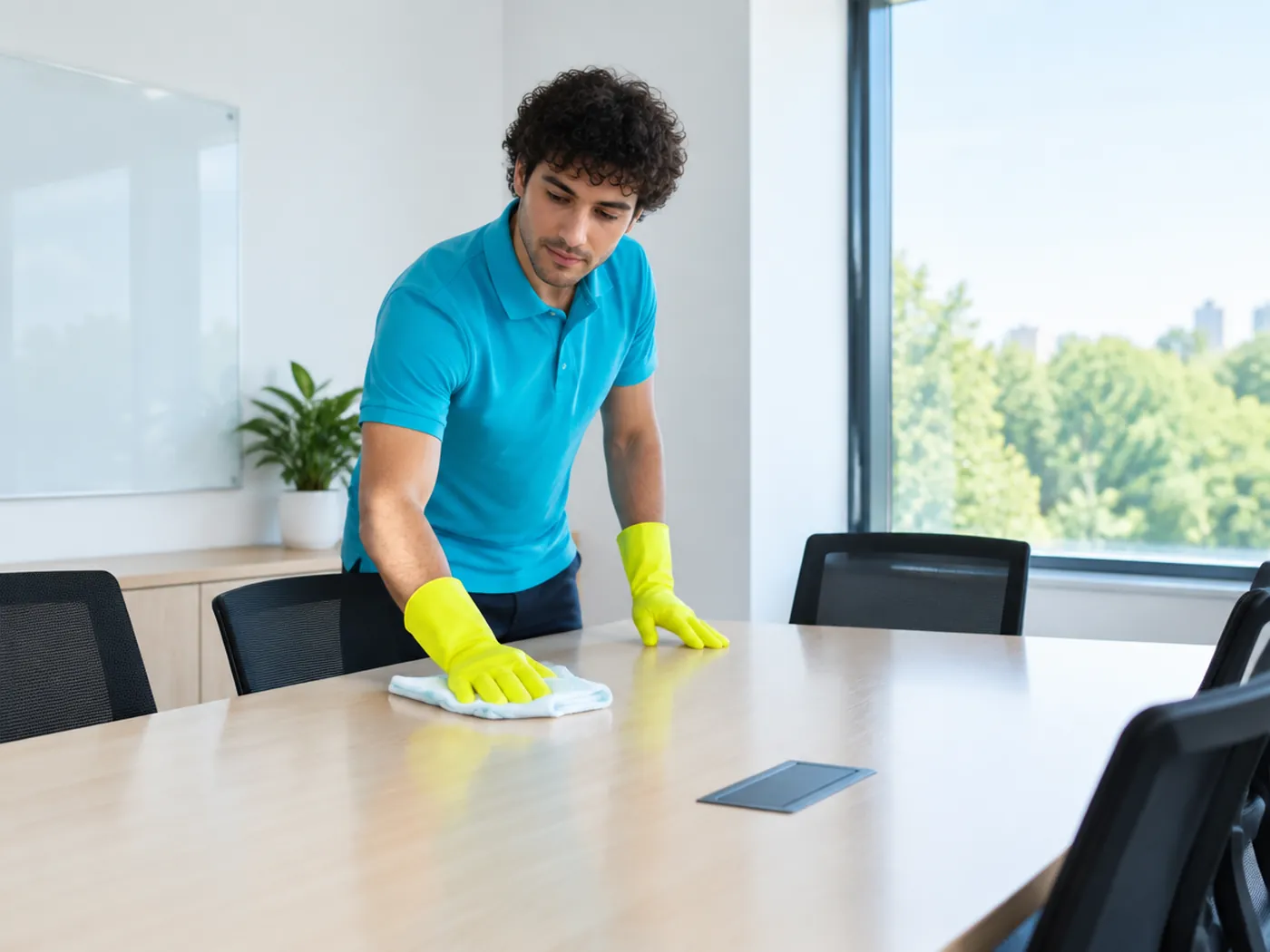
There’s no single right answer, because a five-person studio and a 200-person floor need very different things. But there is a sensible way to work it out, and most offices end up with a similar pattern: some jobs every day, some every week, and a deeper clean every month or so.
The short answer
For most offices:
- Kitchens, bathrooms and bins need attention every working day, or close to it.
- Desks, floors and meeting rooms need cleaning at least weekly, and more often in busy offices.
- Deeper jobs like glass, skirting, appliances and upholstery suit a monthly or quarterly cycle.
Small offices often book two or three visits a week. Larger or busier workplaces usually need a daily clean.
What changes the answer
- Headcount. More people means more dishes, more bathroom use and more rubbish. This is the biggest factor.
- Visitors. If clients come through reception and meeting rooms, those spaces need to look right every day.
- Shared kitchens. A well-used kitchen gets messy fast, and it’s the first thing staff complain about.
- Hybrid work. Fewer people on some days can mean fewer visits, timed for after your busiest days.
- Flooring. Carpet traps dust and needs regular vacuuming; hard floors show marks and need mopping.
- Season. Cold and flu season is a good time to step up cleaning of shared touch points.
A practical cleaning schedule
| How often | What gets cleaned |
|---|---|
| Daily | Kitchen benches and sink, bathrooms, bins emptied, high-touch points (door handles, switches, lift buttons), reception |
| Weekly | Desks and workstations, phones and keyboards, meeting rooms, floors vacuumed and mopped throughout, glass doors |
| Monthly | Inside the fridge and microwave, skirting boards, partition glass, chairs and upholstery spot cleaned |
| Every 3 to 6 months | Carpet steam cleaning, windows, light fittings, vents, a deep clean of kitchens and bathrooms |
Busier offices move jobs up a row: weekly jobs become daily, monthly jobs become weekly.
Schedules by office type
Small office or studio (under 15 people)
Two or three visits a week usually covers it, with staff keeping the kitchen tidy in between. Add a monthly deeper clean.
Medium office (15 to 50 people)
Most need a clean every working day, even if some visits are lighter, because the kitchen and bathrooms can’t wait.
Large office or multiple floors
Daily cleaning, often with a day porter or extra visits for kitchens and bathrooms in peak hours.
Client-facing offices
Reception, meeting rooms and client bathrooms should be done daily, whatever the headcount.
Clinics and healthcare practices have higher standards again; see our medical centre cleaning page.
Signs you need more cleaning
- The kitchen sink has dishes in it by mid-morning.
- Bins are overflowing before the cleaner arrives.
- Staff are wiping their own desks or bringing in their own products.
- Bathrooms run out of paper or soap between visits.
- Dust is visible on desks, sills or screens.
- Meeting rooms are still messy from yesterday when clients arrive.
Start with a deep cleanIf the office has slipped, a one-off deep clean resets everything, and the regular schedule keeps it there.
Choosing an office cleaner
Ask any cleaner you’re considering:
- Will they walk through the site before quoting, so the price reflects the real job?
- Can they clean before or after business hours?
- Is there a written checklist of what’s covered at each visit?
- Who do you call if something’s missed, and how quickly is it fixed?
- What insurance do they hold?
At ALM we walk through larger sites before quoting and build the schedule around your hours. See what’s included in our office cleaning.